South Florida Luxury Market Report: Q2 2026
South Florida's luxury real estate market just posted its biggest quarter in years, and the buyer pool just got a lot bigger
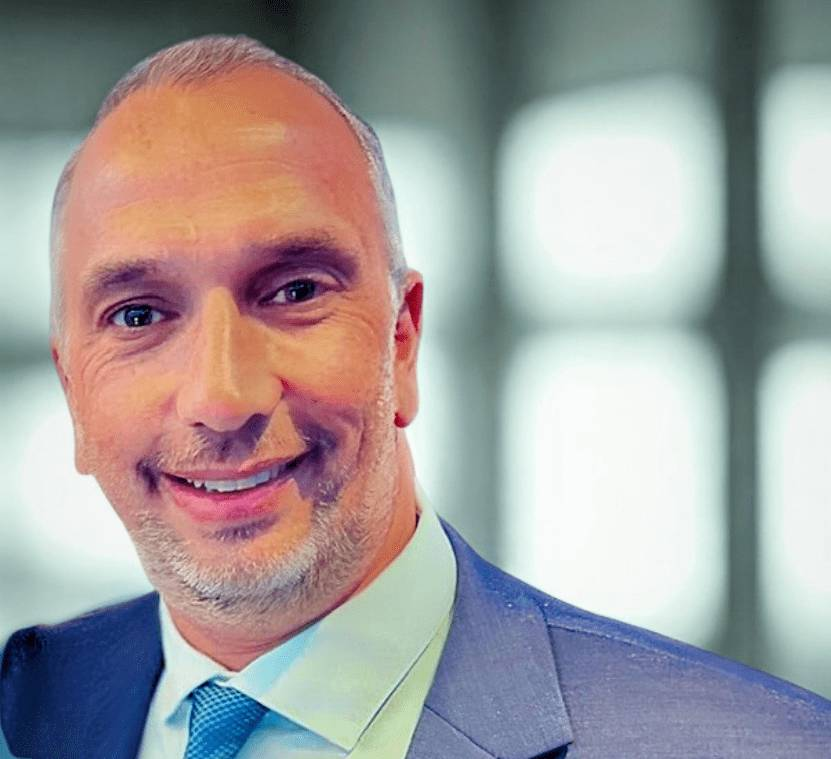
Mike Pappas, CEO, introduces The Keyes Company's Q2 2026 South Florida Luxury Market Report.
South Florida's luxury real estate market closed one of its strongest quarters in recent memory, and the more interesting story sits just beneath that headline: who is actually doing the buying. Single-family luxury home sales rose 20.1% year over year, luxury condo sales rose 23.5%, and both segments held onto meaningful price gains at the top of the market. Growth at this scale rarely comes from a single, uniform buyer. It tends to arrive from several directions at once, each with its own reasoning.
At Keyes, we're watching a market shaped by more than one kind of buyer this year. Some are longtime part-time residents who have decided this is where they want to be full time. Others are arriving from the Northeast and Midwest for reasons that go beyond climate, tax considerations and cost of living among them. And a smaller, steady group continues to treat South Florida property less as a home and more as a place to hold and grow wealth, largely unmoved by where mortgage rates happen to sit in a given quarter.
That variety changes what demand actually looks like on the ground. It isn't one buyer type circling the same small set of listings. It's several groups moving through different price points, in different counties, often at the same time, and it helps explain why Miami-Dade and Palm Beach are managing to grow in volume without losing pricing power, while Southwest Florida is welcoming back buyers who had largely stayed on the sidelines the past few years.
Where these buyers ultimately choose to close says as much as why they're moving in the first place. Miami-Dade is proving a market can expand quickly and still remain selective about who wins a given property, a sign of buyers competing for genuinely scarce inventory rather than shopping broadly. Palm Beach is absorbing similar demand at a pace new listings can actually keep up with. Broward's advantage this quarter has been speed, sellers pricing to move rather than holding out, and getting rewarded for it. Southwest Florida is clearing a backlog of hesitation that built up over a few quieter years.
"There's real variety in who's buying in South Florida this year: longtime residents making it permanent, newcomers relocating for reasons well beyond the weather, and buyers who see this market as a place to preserve and grow what they've built." — Mike Pappas, CEO, The Keyes Company
This report draws entirely on our own Q2 2026 closed transaction data across Miami-Dade, Broward, Palm Beach, Southwest Florida, and Treasure Coast/Martin, considered alongside trade data from MIAMI REALTORS® + RWorld, Florida Realtors®, Realtor.com® and Inman. Our aim wasn't simply to record what happened this quarter, but to understand it, county by county and, where the data allows, neighborhood by neighborhood.
That's the intention behind the sections that follow: not just to show that South Florida's luxury market grew this quarter, but to explore who is behind that growth, why the same growth looks so different from one county to the next, and why we believe this pattern has room to continue through the rest of 2026.
Thinking about buying or selling a luxury property in South Florida this year? Connect with a Keyes luxury specialist who works in your specific market every day, not just the region broadly.
South Florida Luxury Home Sales Post Biggest Quarter in Years
Confident, not conquered
Over 8,000 single-family homes changed hands across South Florida this quarter, up 20.1% from a year ago, with total dollar volume rising to $21.1 billion, up 28.8%. Condos kept pace too: 2,590 units sold, up 23.5%, pushing condo volume to $6.14 billion. This is not a market cooling off. It's a market working through real demand at real scale.
Underneath the headline number, sellers are closing more deals, but fewer of them are getting their exact asking price. In single-family, 9.8% of sales hit original list price a year ago. That's down to 8.6% now, even as total sales grew by a fifth. Condos moved from 8.1% to 7.3%. That shift makes sense once you consider the scale of new activity: when a market absorbs this many additional transactions in a single year, a larger share of those sales are new listings finding their price for the first time, not repeat comparables in an already-established neighborhood. More first-time price discovery naturally means fewer sales landing exactly on the original number, even in a market this strong.
National analysts are describing 2026 in similar terms. Realtor.com senior economist Jake Krimmel has pointed to a housing market working its way toward more balanced, "normal" conditions this year, even as he's noted that price softness in some Florida metros is part of that broader national recalibration. South Florida's luxury tier isn't waiting for that normal to arrive everywhere else. It's already moving at its own pace, and the numbers below show why.
South Florida Luxury Market at a Glance: Q2 2025 to Q2 2026
|
Metric |
Single Family |
Condo/Townhome |
|
Number of sales |
6,670 → 8,013 (+20.1%) |
2,098 → 2,590 (+23.5%) |
|
Average price |
$2.45M → $2.63M (+7.2%) |
$2.36M → $2.37M (+0.3%) |
|
Price per square foot |
$692 → $734 (+6.1%) |
$990 → $982 (-0.8%) |
|
Days on market |
115 → 115 (flat) |
145 → 140 (-3.5%) |
|
Total sale volume |
$16.37B → $21.08B (+28.8%) |
$4.96B → $6.14B (+23.8%) |
Miami-Dade Luxury Real Estate: Writing Its Own Rules
Growth that gets to keep its leverage
Miami-Dade didn't just grow the fastest this quarter, it grew in a way that gave sellers more leverage, not less. Single-family sales jumped 32.5% to 1,000, the steepest increase of any county in this report, and total dollar volume rose 61.4% to $3.61 billion, also the largest gain we tracked. Price per square foot climbed 14.7%, the strongest gain of any county in the region. Normally, that kind of rapid growth comes with sellers loosening their grip on price. Here, the share of homes selling at full asking price rose instead, from 5.2% to 5.5%.
That combination, rising sales, rising price per square foot, and a rising full-price share, only happens one way: buyers competing hard for a limited pool of specific properties rather than a market casting a wider net at more accessible price points. Coral Gables is the clearest proof of that mechanism. Sales there grew a modest 14.4%, well below the county average, while average price jumped 52.5% to just over $5.1 million and the top sale roughly doubled to $47 million, the single-family record for all of Miami-Dade this quarter. Low volume growth paired with outsized price growth is the signature of scarcity: buyers aren't finding more Coral Gables inventory to choose from, they're paying more for the same limited supply. Miami Beach shows a wider version of the same demand, without quite the same scarcity: 92 sales, up 31.4%, with total volume climbing 57.0% to $860.4 million.
On the condo side, Miami-Dade's post-Surfside reserve-funding requirements are creating a visible split: buildings that have completed structural recertification and fully funded reserves are commanding a premium, while older, underfunded buildings are seeing real price resistance. That split is part of why condo transaction growth (11.2%) is outpacing condo price growth (4.9%) so much in this county specifically, more of this quarter's activity is coming from newer, better-capitalized product.
MIAMI REALTORS® + RWorld Chief Economist Gay Cororaton described the broader Miami-Dade market as "remarkably robust despite rising mortgage rates," calling this year "the strongest yet since 2021" for million-dollar sales. MIAMI REALTORS® + RWorld Chairman Alfredo Pujol put it plainly: "The story of Miami real estate has always been long-term growth and resilience."
What this means if you're selling in Miami-Dade: scarcity submarkets like Coral Gables, Coconut Grove, and Pinecrest reward patience and precise pricing, buyers are there and they're competing, but the property has to be positioned correctly for that competition to show up.
What this means if you're buying: volume is up almost everywhere, but that doesn't mean less competition. In the tightest submarkets, full-price offers are becoming more common, not less.
Buying or selling in Miami-Dade? Talk to a Keyes agent who specializes in Coral Gables, Coconut Grove, Miami Beach, or Pinecrest.
Broward County Luxury Real Estate: Moving at Record Speed
When fast and smart happen together
Broward single-family sales rose 17.1% to 1,223, with days on market dropping from 105 to 101. Average price is still up 3.7% year over year, even though it pulled back 7.4% from Q1. The share of full-price sales slipped from 8.9% to 7.7%, fitting the regional pattern of more inventory and more room to negotiate.
That combination, faster sales alongside softer pricing, is a specific and different mechanism than what's driving Miami-Dade. Falling days on market paired with a falling full-price share means sellers priced competitively and were rewarded with speed, rather than holding firm on price and waiting longer to find a buyer willing to meet it. Coral Ridge shows this clearly: sales up 64.9%, days on market down sharply from 112 to 87, alongside a slight pullback in average price. Broward isn't absorbing more buyers by being scarce, it's absorbing them by being priced right. Lighthouse Point/Pompano Beach is the exception worth watching: sales jumped 48.6%, average price rose 14.6% to $2.67 million, and total volume surged 70.4% to $440.7 million, a neighborhood where demand is now strong enough to support price gains most of the rest of the county isn't seeing yet.
Broward's luxury identity remains distinct from its neighbors, this is boating and canal-front country, not the global visibility of Miami-Dade or the social scarcity of Palm Beach Island, and that's exactly what continues to draw a buyer who wants deepwater access and a quieter pace without leaving South Florida.
What this means if you're selling in Broward: pricing to the current market, not last year's comps, is getting rewarded with speed right now. Overpricing and waiting is the more expensive mistake this quarter.
What this means if you're buying: Broward remains the value entry point into South Florida waterfront living relative to Miami-Dade and Palm Beach, and sellers are motivated.
Buying or selling in Broward? Talk to a Keyes agent who specializes in Fort Lauderdale, Coral Ridge, or Lighthouse Point/Pompano Beach.
Palm Beach Luxury Real Estate: Growth That Keeps Its Grip
The steady hand of the region
Palm Beach single-family sales rose 24.2% to 2,534, and the share of full-price sales climbed right alongside it, from 9.7% to 10.4%, similar to the pattern in Miami-Dade. But the mechanism behind it looks different. Palm Beach's price per square foot grew a moderate 5.1%, far below Miami-Dade's 14.7%, which tells us this isn't a market where buyers are fighting over the same handful of scarce properties. It's a market absorbing a large wave of new demand at a pace new listings can actually keep up with, growth and pricing power building steadily together, rather than spiking the way scarcity would push them.
Boca Raton/Delray Beach is doing the heavy lifting: 942 sales, up 16.4%, with full-price sales growing even faster, up 25.3%, meaning a rising share of each new sale in that submarket is clearing at full ask. This quarter's single biggest sale in the entire report, $75 million, closed here. Palm Beach Island's price per square foot ran more than four times the county average on just 56 sales, and Manalapan/Lantana/Hypoluxo posted the single largest price jump anywhere in this report, average price up 157.6% to $16.29 million, both thin, ultra-high-end pockets where a handful of landmark sales can move the needle fast.
West Palm Beach and Palm Beach Island are both climbing this quarter, but for different reasons worth understanding if you're weighing the two: West Palm Beach is absorbing broad, relocation-driven demand at volume, while Palm Beach Island's growth is showing up in price on a much smaller, scarcer set of transactions. Neither is the "better" market, they serve different buyers entirely.
Industry coverage of the luxury sector this year has repeatedly pointed to capital moving into Florida from higher-tax states and from Latin America, drawn by tax stability, lifestyle, and long-term wealth preservation. Palm Beach's numbers this quarter, growth and pricing power moving together without discounting, are a clean example of that broader thesis showing up in real closings.
"Palm Beach County keeps proving that growth and scarcity aren't the same story. Boca Raton and Delray Beach are absorbing real, broad-based demand, while Palm Beach Island is holding onto its position as one of the most irreplaceable addresses in the country. Buyers need a specialist who understands which market they're actually in." — Christina Pappas, President, The Keyes Company
What this means if you're selling in Palm Beach: in Boca Raton and Delray Beach, competitive, market-accurate pricing is winning bidding activity right now. On Palm Beach Island, patience and precision matter more than speed.
What this means if you're buying: West Palm Beach offers relative accessibility with strong momentum. Palm Beach Island requires being ready to move decisively when the right property appears, inventory there isn't waiting around.
Buying or selling in Palm Beach County? Talk to a Keyes agent who specializes in Boca Raton, Delray Beach, West Palm Beach, or Palm Beach Island.
Southwest Florida Luxury Real Estate: Naples and Sarasota's Comeback Quarter
Buyers came back in a big way
Southwest Florida single-family sales rose 18.6% to 2,880, while price per square foot barely moved, up just 1.6%, and the share of full-price sales fell from 12.4% to 8.9%, the steepest drop in the region. That's a distinctly different pattern than Miami-Dade or Palm Beach: falling full-price share alongside falling days on market means buyers are absorbing a backlog of inventory that had been sitting, priced to reflect a few quieter years, not competing over anything scarce.
Naples and Sanibel/Captiva both show that mechanism directly. Naples, whose $40 million top sale set the pace for the entire region, posted sales up 28.8% to 626 with days on market improving slightly. Sanibel/Captiva posted the fastest single-family sales growth of any neighborhood in this report, up 79.4%, with days on market also dropping 7.1%. That's what a comeback looks like in the data: real, growing demand clearing out hesitation that built up over time, rather than buyers chasing a shortage the way they are in Miami-Dade.
Naples and Sarasota remain the region's anchor markets and continue to show up repeatedly in national coverage of where Florida wealth migration is landing.
Florida Realtors® Chief Economist Dr. Brad O'Connor summed up the statewide luxury picture plainly: "Luxury seems to largely be doing very well right now."
What this means if you're selling in Southwest Florida: the backlog of hesitant buyers is clearing. Well-priced listings that have been sitting are more likely to move now than they were two quarters ago.
What this means if you're buying: this is a market where inventory and negotiating room still exist, but that window is closing as absorption continues.
Buying or selling in Southwest Florida? Talk to a Keyes agent who specializes in Naples, Sarasota, or Sanibel/Captiva.
Treasure Coast Luxury Real Estate: Holding the Line While Everyone Else Sprints
Small market, steady hand
Treasure Coast/Martin was the one county where single-family sales eased this quarter, down 6.5% to 376, while average price rose a modest 2.2% and price per square foot rose 6.8%. This is a smaller, steadier market than the rest of the region, one that isn't chasing the same volume growth as Miami-Dade or Palm Beach, but still shows real pockets of strength.
Jupiter Island is the clearest example, and it's worth explaining carefully: sales there more than doubled, from 8 to 20, even as the neighborhood's average price moved lower. That's not a contradiction. In a market this size, the average price reflects which specific homes happened to close in a given quarter, not a broad shift in what buyers are willing to pay. A different, often less expensive mix of homes selling this year compared to last year is enough on its own to move that average, even while genuine, growing buyer interest in the corridor is real and measurable in the sales count.
The Treasure Coast's long-term growth story stands on its own: a steady pull of buyers from the tri-county area moving north for more space, a slower pace, and a waterfront lifestyle at a different scale, all within easy reach of Palm Beach's main hubs.
What this means if you're selling on the Treasure Coast: this is a market that rewards realistic pricing and patience over urgency, it isn't moving at Miami-Dade's speed and shouldn't be priced as if it is.
What this means if you're buying: for buyers priced out of Palm Beach's core markets, this remains one of the more accessible paths to waterfront South Florida living.
Buying or selling on the Treasure Coast? Talk to a Keyes agent who specializes in Stuart, Jupiter Island, or Vero Beach.